The Leak Before the Spend · The audit

Your ads might be fine. That's the first thing I check.

One brand spent three months on new ads to fix a cost per customer that wouldn't move. The ads were working. The product pages needed more reviews. After adding 270 more reviews, they got a third more sales from every ad dollar. For $3,000, I audit your ad account, your store, and your email together, and tell you which lever is holding the rest back, what to fix, and in what order.

10+years buying ads
$100M+ad spend managed
50+DTC brands
25+audits a year

Do the ad math

Example numbers
Return on ad spend (ROAS)
1.35first purchase
Add your gross margin and your breakeven appears on the gauge.
%

Now move one slider at a time. Doubling your conversion rate does exactly what halving your click cost does.

Arithmetic on your own numbers, not a prediction. Pull all three from the same 30 days.

Brands I've worked with
GossamerWeezieEpauletBrightlandKiss My KetoMargauxUrban MoonshineMegababeNeely and ChloeCocktail KingdomAmerican TrenchOliphantBumoSqairzLichenAddison BayJRINKMatsudale PÈREOdeleBaby JivesMaterialObjects Are ByCartolina NantucketChess at 3The DoppleJanewinMixtape MassacreBeing and BusinessWattz
00 · The premise

The advice is half right.
The wrong half is expensive.

The popular advice in e-commerce right now is to make more creative. Ship more concepts. Test faster. Feed the algorithm.

It's mostly right. It also skips something.

If your product page converts 1.2% of visitors, five times the ads sends five times the people to a page where almost 99 of every 100 leave without buying. If your average order value can't cover what it costs you to acquire a customer, the sharpest ad in your category can't fix the math. If customers don't come back, you pay full price for a brand new one every single time.

"More" is sometimes the answer. Sometimes it isn't. The fix is knowing which levers are holding your business back, then moving them.

I'm a media buyer. Auditing an account this way is the first thing I do with every brand before I spend a dollar of their money.

01 · The five levers

Five levers.
Any one can hold the rest back.

Paid growth runs on five levers. Multiply them and you get profit. If one is broken, the other four can't carry it.

Lever 01
Creative
What gets the click
Measured byClick-through rateCost per click
Try it on the sliders ↑
Lever 02
Media buying
How the budget gets spent
Measured bySpend by adReturn by ad
Lever 03
Landing page
What turns the click into an order
Measured byConversion rate
Try it on the sliders ↑
Lever 04
Order value
What the order is worth (AOV)
Measured byAverage order value
Try it on the sliders ↑
Lever 05
Lifetime value
What the customer is worth over time (LTV)
Measured byRepeat rate12-month value
The result
Profit
Multiply the five. Weak on any one, and the other four can't make up for it.

Most teams have a home lever, the one they reach for when a number stops moving. Media buyers tune campaigns. Creative people brief more ads. Site people change buttons. Email people add a flow. The instinct is to do more of the thing you already know how to do.

Sometimes that's the right lever. Sometimes the creative is fine and the page is broken. Sometimes the page is fine and the first order is too small to cover what it cost to acquire the customer.

Case study

270 reviews did what three months of new creative couldn't.

A client's cost to acquire a customer wouldn't move. New creative went out every week. Three months in, the numbers hadn't budged, and the plan was more creative.

I audited all five levers instead. The creative was working. People were clicking. The product pages were what was holding it back.

1.5%of visitors bought
270reviews added to the product pages
2%+bought afterward

That's a third more sales from every ad dollar. Zero new ads.

Try it on the sliders at the top: set conversion to 1.5%, then move it to 2%. That's the whole case study, on your own numbers. Back to the math ↑

The cheap click can be the expensive one, if those clicks aren't converting or the average order value is too low.

If the sliders just showed you what's holding your store back, good. That was free. What they can't show you is why. A 1.5% conversion rate could be the page, the offer, the traffic you're buying, or fine print somebody added to the checkout.

Finding out which is the audit.
02 · Why this stays hidden

Every number can look fine
on its own.

A sale is a chain of steps: the click, the page, the cart, the checkout, the order, the next order. Most reports read one step. The audit lays every step out in order, week by week, so when one breaks you can see where, and when.

Case study

Years ago a client's return dropped, and nothing in the ad account had changed. So I laid out every step between the click and the purchase.

Steadycost per click
−36%checkout to purchase

They had added a $20 hold on every customer's card at checkout, to stop fraud. A sensible fix, made for a real reason, and nobody watching the ads could have connected it to the drop.

When they took the hold off, checkouts came most of the way back.

The ads were never the problem, and the ad report could never have shown it. That's why I audit the store and the email next to the ad account, and why every deck maps your numbers over time and flags the dates where something broke.

You don't have to become an expert in any of this. You have to know enough to form an opinion, so you can hold the people spending your money to it. Three checks you can run this afternoon:

Is your prospecting budget paying to reach people who already buy from you?
Open a prospecting ad set in Ads Manager and look at its audience. If past purchasers aren't excluded, or the customer list it uses hasn't synced lately, your return on new customers is mixed in with your return on old ones, and it looks better than it is. I once opened a retargeting ad set named "Exclude Purchasers 180." It was including them.
Is Meta spending the most on your best ad?
In your biggest ad set, sort the ads by amount spent, then read return on ad spend (ROAS) down the same list. In one account I audited, twelve ads shared one budget and the ad returning 1.17 got 4.4 times the budget of the ad returning 2.21. Nobody chose that split. Meta's system is built to spend a budget smoothly, not to move it to the best return.
Has your email pop-up's offer ever been tested?
Find the pop-up's opt-in rate. Then ask when the offer on it last changed, and whether a second offer has ever run against it. While you're there, sign up yourself and see whether a welcome email arrives.
03 · A note on the pitch

How I'm selling
you this.

Every sales page builds a villain. It makes you feel a problem, then makes the product feel like the answer. I'm doing it too. Here are the villains I picked:

  1. Villain 01

    "More" as the default answer.

    More creative, more budget, more tools. Sometimes right. Never a diagnosis.

  2. Villain 02

    Meta's recommended setup.

    Meta gets paid when you spend, whether or not you profit. Its defaults are built for that.

  3. Villain 03

    Numbers read one at a time.

    Each one can look fine while the steps, in order, tell a different story.

I picked those because I think they're real, and because I can show you a count for each one on this page. Not because they convert.

If you disagree with the diagnosis, the audit won't help you. If you agree, keep reading.

04 · What I'm actually selling

One audit of all five.
On your numbers.

  1. You fill out a short form

    Five questions about your brand and your spend. Two minutes.

  2. I reply personally

    If it's a fit, I send the questionnaire: what winning means to you, how much money, if any, you're willing to lose to grow, and over what time. A leak is only a leak compared to a goal. If it isn't a fit, I tell you why.

  3. You pay, and we talk

    You and whoever runs your ads and email. You've paid by then, so it isn't a pitch. The fact that changes how I see an account often comes from this call, not from a dashboard.

  4. I audit your accounts and build the deck

    Ad account, store, and email platform, together, with read-only access. About ten hours of my time. Every figure in the deck can be reproduced live from your own accounts.

  5. I walk your team through it

    What's working, the few things worth fixing, the fix for each, and the order.

  6. Tell me what moved

    Email me what your team shipped and what changed. I reply in writing, with what I'd do next.

What's in the deck

  • The ad math, on your numbersThe same math as the sliders at the top, so everyone in the room reads the rest the same way.
  • What you're doing wellThis comes first, before any problem. Most accounts I audit are run by people who know what they're doing.
  • Your numbers over timeEvery step from click to purchase, mapped week by week. Where a number broke on a specific date and hurt your return, I flag it, so we can find out what changed that day and whether it can be fixed.
  • The few things worth fixingEach one with its number and its fix. A well-run account gets a short list, not fifty items.
  • What a customer is worth to youMeasured from your own orders, so you can set a return goal for your ads instead of guessing at one.
  • A 90-day planWhat to fix right away, what to test, and what to build. Every item gets an owner and a date, and the plan names the three to ship first.

The plan is written for your team to run without me.

05 · Two more from accounts I run

More case studies

Case study
$36Klost by pausing ads too early

I went back through $110K of spend across 127 ads on one account. The ads we paused too soon cost more than the losers we let run too long.

Case study
$461
$125cost to acquire a customer, the same ad, launched seven times in a month

Same ad. Same month. I launched it seven times, and the cost to acquire a customer ran anywhere from $125 to $461. Nothing about the ad changed between launches.

Neither of those came from a hunch. I don't trust my own intuition, so I test it and measure.

06 · Who's auditing your account

I audit it.
Nobody else.

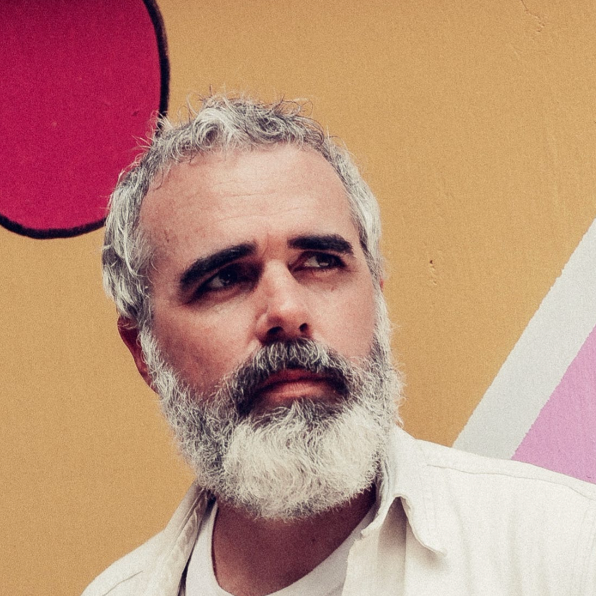
Justin Marshall

I've audited hundreds of ad accounts. The ad account is rarely the only problem.

I manage Facebook and Instagram ads for DTC e-commerce brands. Every brand I've taken on started with an audit, and I've done many more for brands that never became clients.

For most of those years I only looked at the ad account. Then ads got more expensive, careful buying stopped being enough, and I started auditing the store and the email next to the ads. That's where a lot of the money turns out to be.

I keep a small client roster on purpose, and I'm not building an agency. The plan is written for your team to run, not for me.

No sales calls. You get the audit.

07 · Testimonials

Before I sold audits,
I taught this.

These are students from the media buying program I used to run, not audit clients. They run real ad accounts at scale, and they still use what I taught them.

Justin is a great deep thinker and teacher. I took his mentorship course when we were trying to take our business to the next level with Facebook ads as a major driving force. What I learned was a big help getting us from low 6-figure ad spend per month to well into 7-figures per month, profitably. He knows his stuff and only focuses on the needle moving activities, and not a bunch of click bait twitter bro non-sense.
Alex StarkCo-founder and CMO, Ogee
Justin's class was the jumping-off point in my media buying career. It gave me the confidence to take on larger accounts — since then I've personally managed over $150M+ in spend. We still use his MAA process across all our accounts. I especially appreciated his process-oriented approach.
Tanner DuncanGM, Herrmann Digital. MAA is my Metrics, Analysis, Action sheet.
When an opportunity comes to learn from Justin, you need to take it. I did his last course on media buying and it completely changed the way I approach Meta ads. What I learned gave me the courage to go out on my own — first freelancing, then starting my own agency. Don't miss this.
Chris MikulinGrowth Marketer and Media Buyer
Justin's Meta Ads course kickstarted my career in digital marketing. It gave me my first real foundation in paid media, and since then I've gone on to manage millions in ad spend across many platforms. The core principles from that course still guide how I approach media buying today.
Lillian CuttsDirector Paid Search, Direct Agents
I've known Justin for a decade. We met in a Mastermind for agency owners and marketers, where he later became one of the coaches. When I joined his advanced Meta Ads program, we were a small group of expert advertisers. It genuinely changed how my agency approaches media buying. I still have those notes. That's how good the frameworks were. Justin has this ability to break down complex strategies with pragmatic clarity, always tied back to the numbers that actually matter.
Laura CiannameaFounder and Strategist, Remotely Collective
08 · How I'm pricing this, and why

One price.
Real reasons.

If nothing on this page sounds like your situation, don't buy. I hope the sliders were useful. Run the three checks anyway. They're broken at more companies than you'd expect, usually because nothing flags them when they break.

Most free audits exist to sell you the retainer afterward. This one costs money so it doesn't have to sell you anything. You're paying for about ten hours of my time and the judgment behind it, not for a pitch dressed up as a report.

I keep the number small, because client accounts come first. That's my actual calendar. There's no countdown.

It's for e-commerce brands spending $20K or more a month on Facebook and Instagram ads. Under that, my free posts on The Leak Before the Spend will carry you further than the audit will. Start there.

09 · Questions

The common ones.

What if my account is already in good shape?
Then the deck is short, and I'll say so. I won't pad it with findings to justify the fee, and I won't pitch you anything. A team that's doing most things right still needs to know the few things that aren't, and the order.
What access do you need?
Read-only access to your ad account, your store, and your email platform. I log in with the access you give me. Nothing gets installed on your side and nothing gets changed.
We already have an agency. Will this get someone fired?
That's not what it's for. The deck starts with what your team is doing well, and most of what I find is in settings a platform chose for them, or in steps that only show up when you lay them out in order. The people running your account are usually the ones who use the plan.
Do we have to do it your way?
No. Some of what I recommend goes against Meta's own recommendations, and I'll show you the reasoning and your numbers. What you do with it is your call.
Who runs the plan afterward?
Your team. If a fix is in the ad account, the deck says exactly what I'd change. If it's your copy, your checkout, or your email, it says what to get fixed and how you'll know it's fixed. If you want my help after that, I do hourly calls, only for brands that have done the audit.
Is there a refund?
Until I start the work, yes. After our 45-minute call, if either of us thinks the audit won't help, I refund the full $3,000 and we part friends. Once I start going through your accounts, my hours are spent, so there's no refund after that.
How long does it take?
About a week from the day I have access to the day you have the deck. The walkthrough is scheduled after that, with enough notice to get your team in the room.
Is AI doing the audit?
AI runs the checks, which is why I can audit three systems in ten hours. I make every verdict. No software can tell you what to fix first in your business, with your margins, against your goal.

Find out what's
holding your
account back.

Tell me a little about your brand. I'll reply personally within a day, either to say it's a fit and send the full questionnaire, or to tell you honestly why it isn't. You don't pay anything until you've seen the questionnaire and we've agreed it's worth doing.